Hugh Howey · 2011–2013
The Silo Saga
Three books about a buried city of a hundred and forty-four levels, the people who keep it running, and the people who built it.
Hugh Howey’s Silo books began as a short story. In July 2011, while working in a bookshop in the North Carolina mountains, he self-published Wool on Amazon’s Kindle store: a sheriff in a buried city asks to go outside, the one request nobody comes back from. Readers wanted to know what happened next, and within six months the story was five parts long; Shift and Dust followed by August 2013. Three books, and at their centre one place: Silo 18, a city dug a hundred and forty-four levels into the earth around a single staircase, whose people know the dead world above only through a screen.
This is an unofficial reader’s companion to all three: each book summarized by its own parts and walked in charcoal frames, a page for the silo itself, and notes on how the books reached the screen. It spoils everything, the last page of Dust included.
The books are also Apple’s Silo: three seasons aired so far (2023, 2024–25, 2026), and the fourth and final season due on July 9, 2027.
A buried city
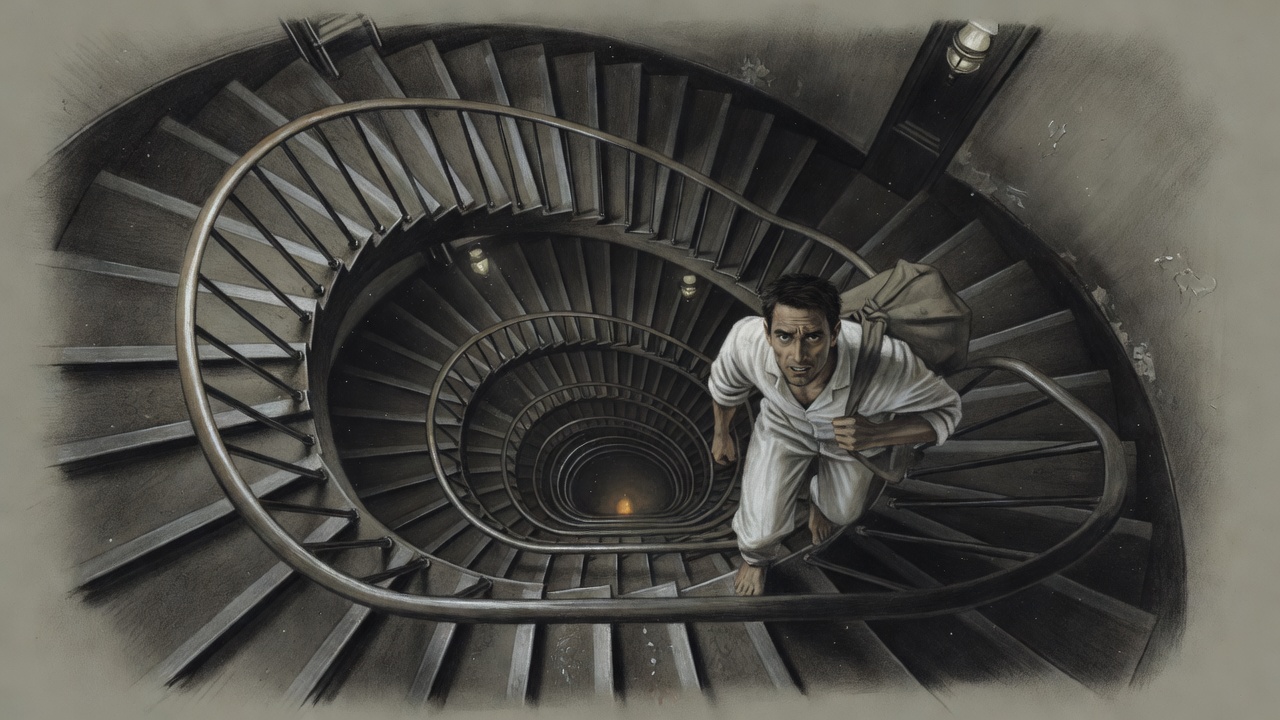
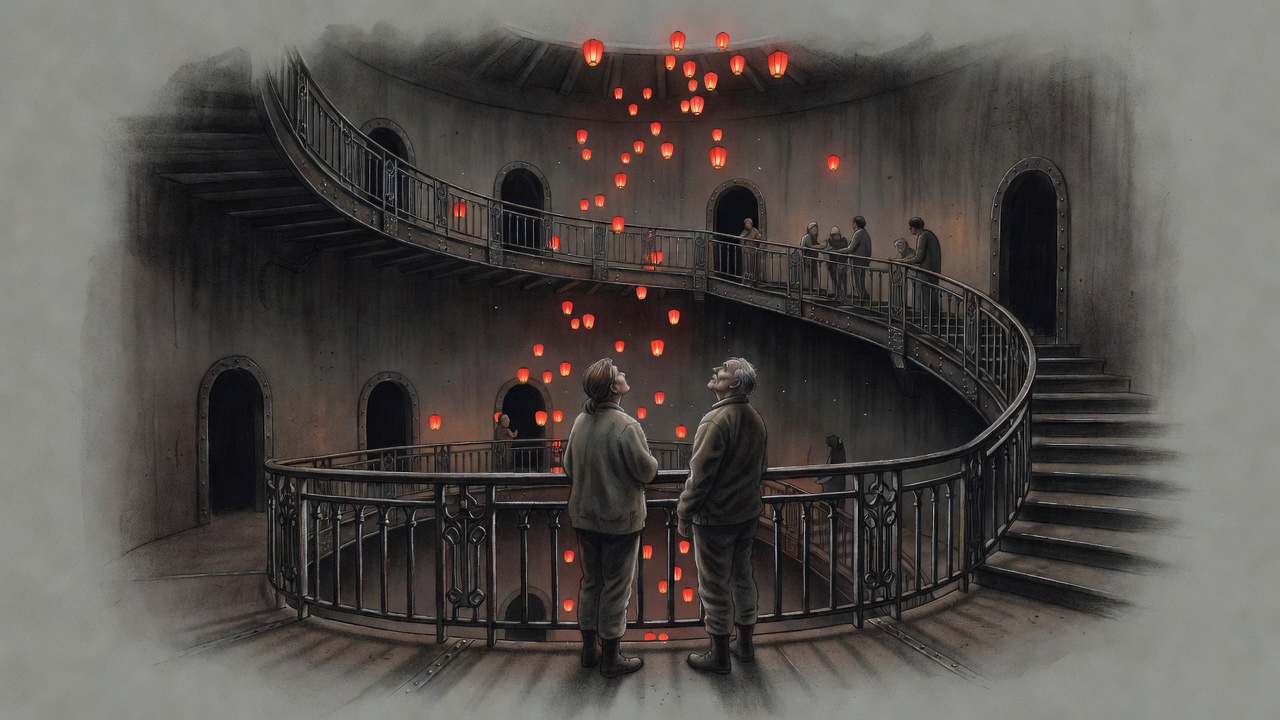
Silo 18 is all its people will ever know: a shaft sunk beneath a ring of dead hills, a hundred and forty-four levels deep, each level a ring of rooms around a hollow center through which winds the one thing that joins them, a great spiral staircase of worn steel. There is no lift. Barefoot porters run goods and notes up and down for chits, and old Mayor Jahns, walking with a stick, needs two days to get down to Mechanical. You can tell a stranger’s trade by the colour of their overalls: Mechanical blue, IT silver, farmers green, porters white. IT sits in the thirties with the servers; Mechanical sits at the bottom with the generator and the oil well that keep everyone alive. Howey has said he wrote Wool’s second part to “introduce readers to the star of the books, the silo itself.”
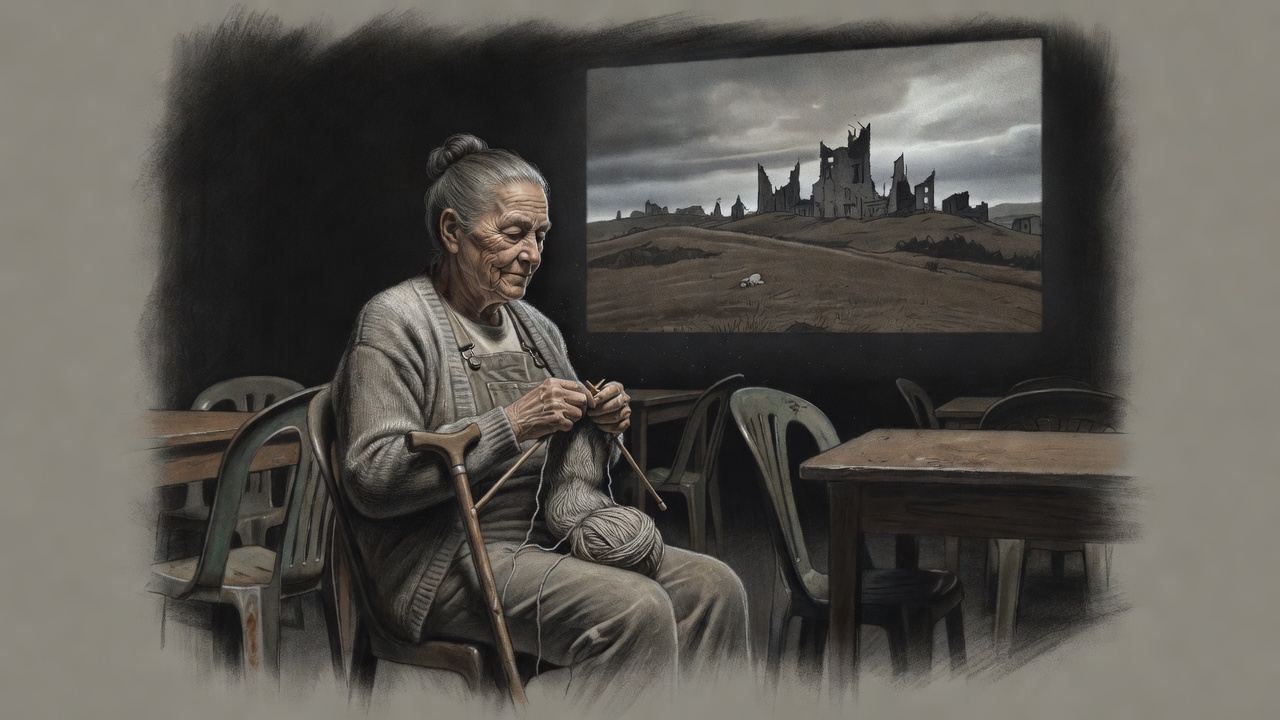
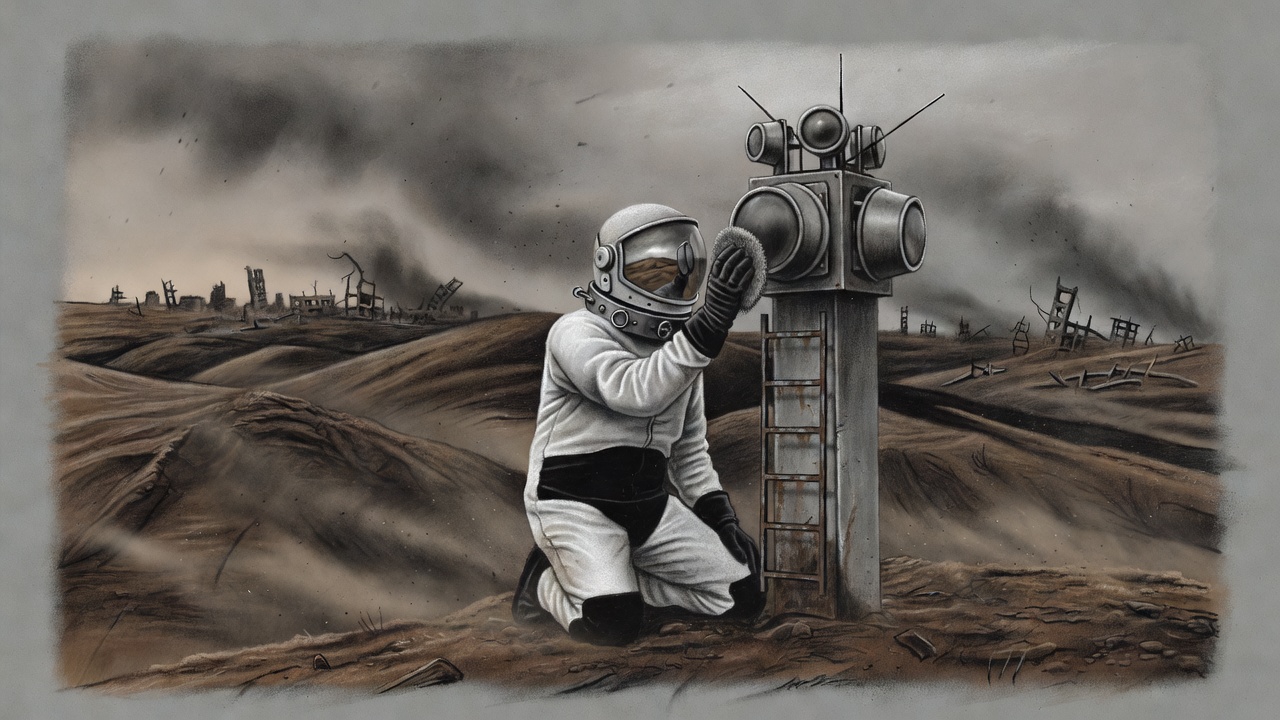
On the top level is the cafeteria, and on its wall the silo’s only window: a wallscreen showing a grainy picture of brown hills, dark cloud and a ruined city on the horizon, fed by sensors outside that the grime slowly blurs. Keeping it clear is the silo’s one ritual and its one death sentence. Whoever says they want to go outside is granted it — suited up, put through the airlock, and sent up the ramp with pads of wool to scrub the lenses. Everyone who sits in the holding cell swears they will not clean, and then they do, and then they walk up the hill and die in full view.
Three sets of words run the place. The Pact is its law, which also rations children by lottery. The Order is IT’s manual for running a silo, kept by its head. The Legacy is the old world’s books, kept on precious paper in IT. The series is the slow discovery of what all three are for: who dug the silo, who is watching it, and what is really outside.
Wool
Wool is a relay. It opens on Sheriff Holston climbing to the top of the silo, telling his deputy, Marnes, “Tell her I want to go outside,” and walking into his own holding cell. Three years earlier his wife Allison, an IT technician who could recover overwritten files, found that the records of the silo’s old uprisings had been wiped and decided that the view on the wall was a fabrication. She asked to go out, and promised to come back for him:
If that hill is there and it’s green, we’ll go over it together.
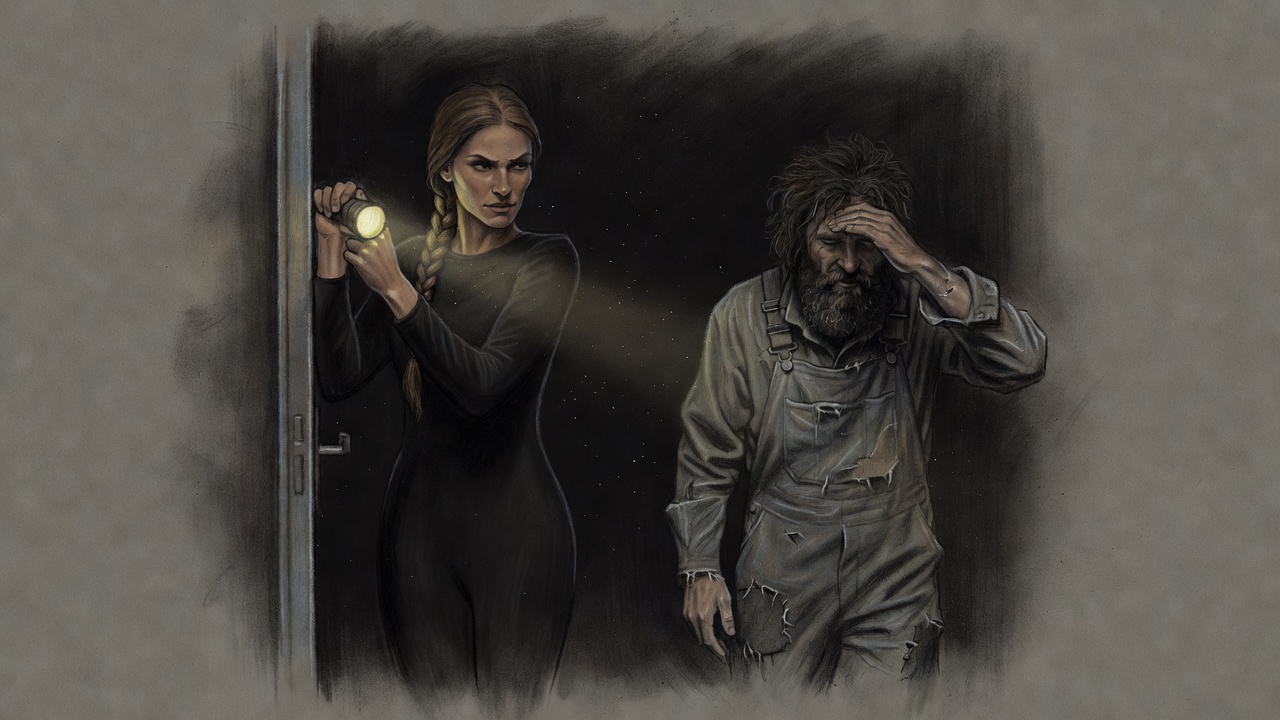
On the ramp his visor shows him a paradise, green grass and the distant city whole, and he cleans the lenses out of pity for the people inside and starts up the hill. Then the poison reaches him, the helmet comes off, and the green goes with it: it lived on a screen inside his visor. He dies on the brown slope beside Allison’s body.
In Proper Gauge, Mayor Jahns and Deputy Marnes walk down the stair to recruit a new sheriff, over the objections of Bernard Holland, the head of IT, who wants a Judicial clerk named Peter Billings. At the bottom they find Juliette Nichols, thirty-four, a mechanic who keeps the generator running. Climbing home, Jahns dies of poisoned water meant for Marnes. In Casting Off, Juliette starts asking what Holston had been looking into; Marnes is found hanged, then her friend Scottie in IT; and she is sent out to clean. But Walker, the old electrician who taught her, has called in favours with Supply, and her suit is wrapped in Mechanical’s tape instead of IT’s, which is made to fail. For the first time in living memory, a cleaner refuses. Juliette walks over the hill.
The Unraveling and The Stranded split between two silos. Past the hill the visor’s picture stops, and in the next bowl stands another silo, 17, its ramp heaped with the dead; inside, alone for thirty-four years, is a wild-bearded man who calls himself Solo. In 18, Mechanical learns that IT has been sending people out to die on purpose, marches up to take it, and is crushed; its head, Knox, dies with dozens more. Bernard’s new shadow, a young stargazer named Lukas Kyle, raises Silo 17 on the one server he is forbidden to answer, and he and Juliette talk every night. She dives 17’s flooded depths to restart its pumps, finds children living wild in its farms, and crosses home to save her friends. The figure kneeling in the airlock is not Lukas, as she expected, but Bernard, sent out in his place by the new sheriff, Billings, and he burns rather than let her save him. Juliette wakes badly burned; weeks later she learns she is mayor, and takes the job on one condition: no more lies, and everyone told that they are not alone.
Shift
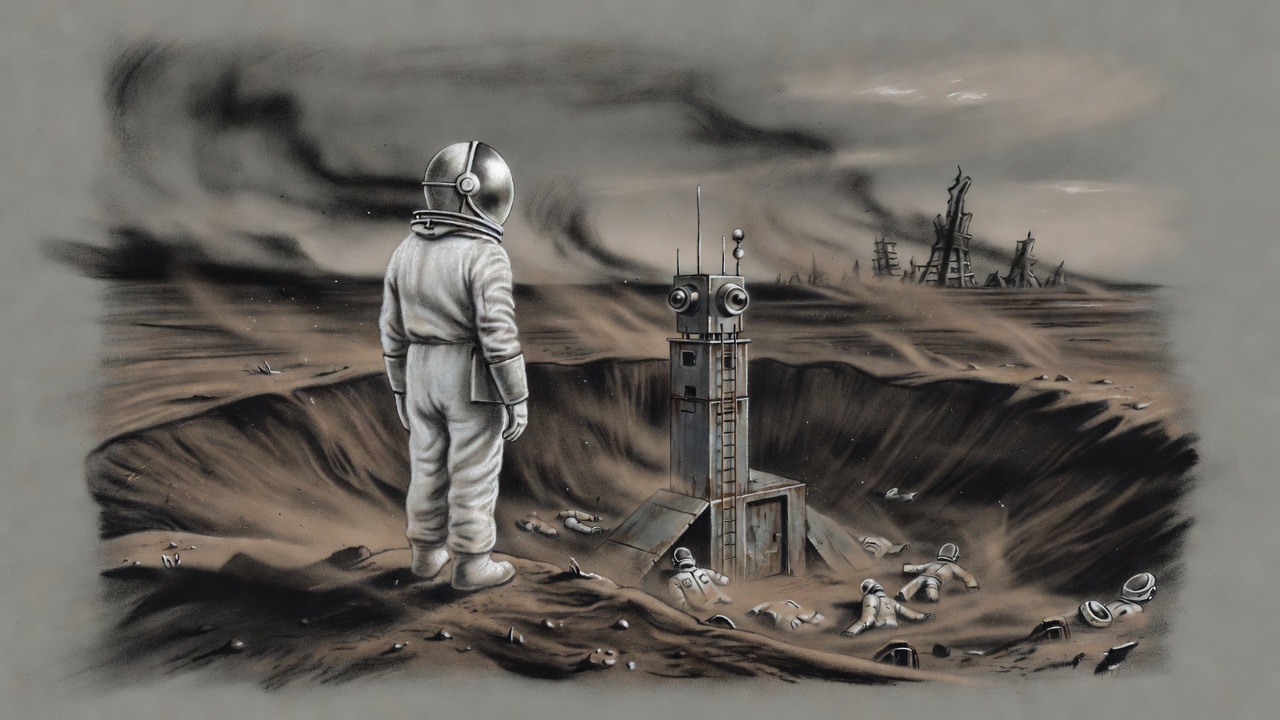
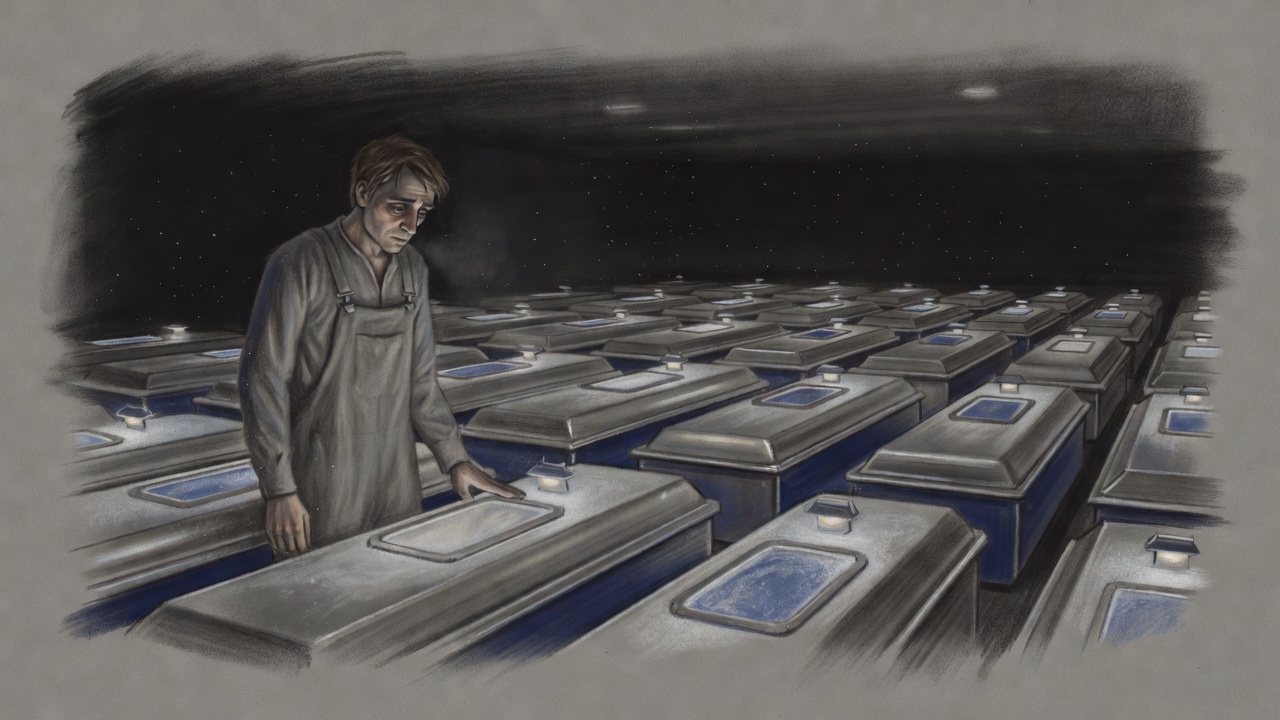
Shift is a prequel that turns into a sequel, published as three parts — Legacy, Order and Pact — and most of its chapters are headed with a place and a year. In Washington in 2049, Senator Paul Thurman hands Donald Keene, a freshman congressman from Georgia who trained as an architect, a job: design an underground shelter for the workers at a facility in Fulton County, Georgia, built to store the world’s spent nuclear fuel. The lead engineer is Thurman’s daughter Anna, Donald’s college girlfriend; his wife, Helen, waits in Savannah. The facility is a cover. In 2052, as a national party convention camps on the man-made hills above the finished site, bombs fall on Atlanta and the crowds are herded underground into fifty silos: World Order Operation Fifty, W.O.O.L. Donald designed the lifeboats without knowing what they were for.
The reason comes later. Weapons made of machines too small to see were already loose, a British nanotechnologist named Erskine explains, so the founders ended the world first, on their own terms: the bombs were for show, the killing was done invisibly in the air, and the silos keep a remnant underground for five hundred years. Silo 1 runs the other forty-nine. Its men wake from a deep freeze for six-month shifts and are given pills to forget; its women and children are never meant to wake.
Donald wakes there three times. In 2110, under the name Troy, he orders a failing Silo 12 gassed, then stops taking his pills, remembers that his wife is gone, and goes back under. In 2212 Thurman wakes him because silos are going dark and the drug has failed on him; Silo 18’s Great Uprising, told from inside through a teenage porter named Mission Jones, ends with Silo 1 resetting it — fewer people, wiped computers, wiped memories — and Donald, despairing, walks out into the poison toward Silo 2, where Helen lived her life under another name, and is dragged back.
Pact cuts between Silo 1 in 2345 and Silo 17 from 2312. As 17 tears itself apart, sixteen-year-old Jimmy Parker hides in the server room on his father’s orders, and Silo 1 gasses the rest. He lives on alone, names himself Solo, keeps a cat called Shadow, and in Year Thirty-Four sees Juliette walk in. In Silo 1, Donald, woken this time under Thurman’s name, works out that Anna kept him from Helen in 2052 and had him woken in her father’s place, and poisons her. Then he finds a memo in a folder headed THE PACT: only one silo is ever to be let out, and the rest, Silo 1’s sleepers included, are to die. Donald’s verdict: “It’s a suicide pact.” He wakes his sister Charlotte, an Air Force drone pilot, and hides her in the armory; shoots Thurman; and on the last page calls Silo 18. Juliette answers.
Dust
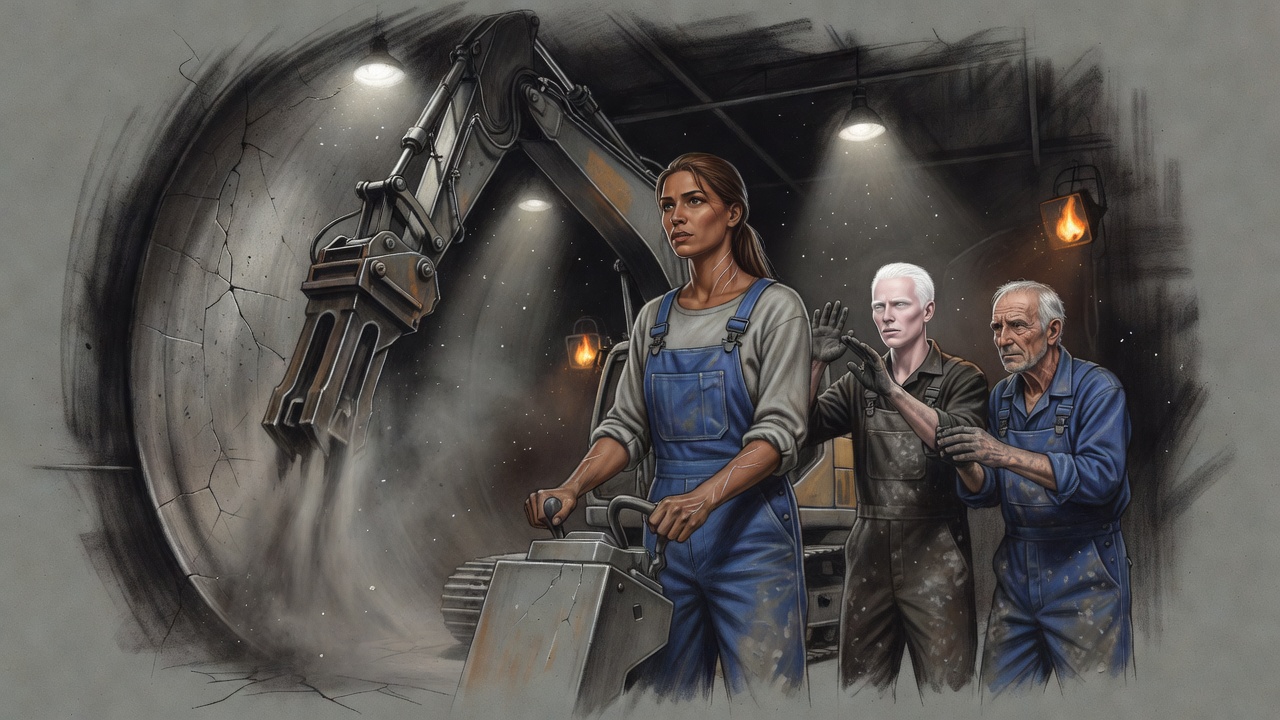
Dust picks up where both leave off. Juliette, scarred, is mayor of Silo 18; Lukas, her partner now, is head of IT; her friend Shirly runs Mechanical. Behind Mechanical’s outer wall lies a buried digging machine, and Juliette is hammering through to it, meaning to tunnel to Silo 17 and the people she promised to come back for. In Silo 1, Donald, coughing blood, orders Lukas to stop, because Silo 1 can feel every blow; his sister hides among the drones; and the man he shot turns up alive, sealed in a pod under someone else’s name. It is Thurman.
The tunnel breaks through while Juliette is outside on purpose, taking samples, and the samples show what Wool never could: the “argon” that floods the airlock at every cleaning is the poison itself, let out into the world a little more each time. She tells Silo 1 she is cutting off its cameras, power and gas. Thurman’s answer is to shut Silo 18 down. White fog pours into the server room and then down the stairwell. Juliette herds the crowd into the tunnel until Shirly knocks her out, takes her place in the control room, and fires the charges that seal the tunnel, and herself in with Silo 18. Juliette comes to in the dark with the radio in her hands, and hears Lukas’s last words:
This is it. This is it. I love you, Jules.
About two hundred people make it to Silo 17.
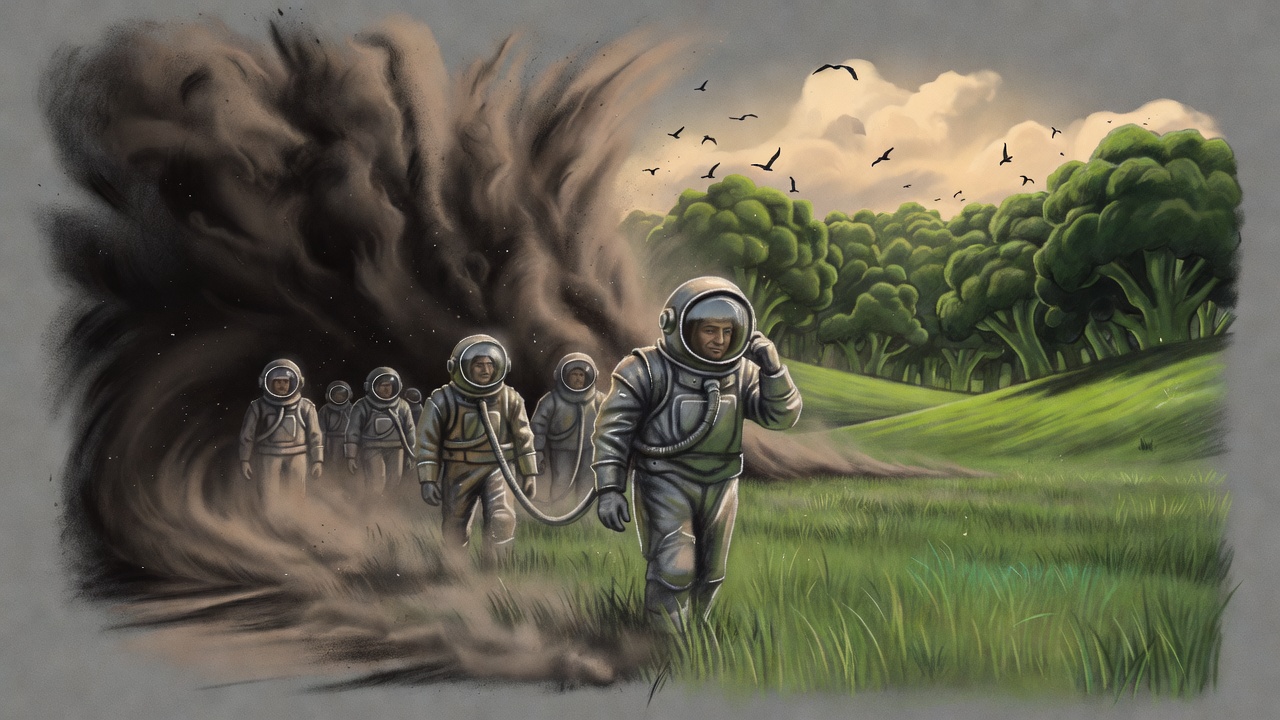
In 17, Juliette reads the layout of the servers as a map: the diggers were never meant to go silo to silo, and 18’s was aimed somewhere beyond them all, at the spot marked SEED on a map Charlotte has found in Silo 1. In Silo 1, Charlotte strips a bomb of its safeties; a young guard, Darcy, changes sides and dies covering her escape; and Donald, shot, fires into the bomb at the reactor, and Silo 1 falls into the earth with Thurman in it. Then the walk. Tied together by air hoses, the survivors of two silos head into the toxic wind, break through a wall of dust into knee-high grass, and look back to see that the dead world is only a dome over the silo field. Juliette’s father unlatches his helmet first and breathes. Ahead stands the Seed, a concrete tower stocked with seeds, soil and tools; the dynamite Juliette carried for Silo 1 opens its door instead, and Charlotte staggers in out of the grass to join them. The last line is Juliette’s:
I think we can make any damn thing we like.
Three books, one story
Read them in the order Howey published them: Wool, Shift, Dust. His own page for the last book gave each a line: Wool “introduced the silo and its inhabitants”, Shift told the story of the silos’ making, and Dust “will chronicle their undoing.” Wool is built on not knowing, and Shift exists to answer it; read the other way round, the first book loses its floor.
The chronology runs differently, and Shift is why. Laid end to end, the story goes: Washington and Georgia, 2049 to 2052; Silo 1 in 2110 and 2212, with Silo 18’s Great Uprising; Silo 17 from its fall in 2312; then Wool, which never gives a year but which Shift’s headers place in 2345, running alongside Shift’s last Silo 1 chapters; then Dust. The two middle threads end together: Shift’s last page is Wool’s ending heard from Silo 1, with Donald on the radio and Juliette answering.
Around the three books sit three short stories set in the silo world, “In the Air”, “In the Mountains” and “In the Woods” (2014–15), and a graphic novel of Wool (2014); the reading list below has them. Howey has said he plans another trilogy, following Silo 40 from before Wool to after Dust.
On screen
20th Century Fox bought the film rights in May 2012 and commissioned scripts, but never shot one; by Howey’s account the rights came home around 2016. AMC began developing a series in 2018; Apple asked to come in, and in May 2021 ordered ten episodes from AMC Studios, with Graham Yost as showrunner and Rebecca Ferguson as Juliette. Season 1 (2023) covers only the first half of Wool, stretched into a detective story about George Wilkins, a dead man the book barely sketches, and ends as Juliette walks over the hill. Season 2 (2024–25) finishes Wool with the radio between the silos cut, so that Silo 18 fights its war believing her dead, and lets Mechanical’s rising win. Season 3 (2026), on a service now called just Apple TV, is the Shift season, but it moves Washington to something like the present and renames its people: Donald Keene is Daniel Keene, Senator Paul Thurman is Senator Rosalind Thurman, and Helen is a journalist he has only just met. It also lets Bernard survive the fire, for a while. The fourth and final season, adapting Dust, premieres on July 9, 2027. The show renames others as well — Solo is Jimmy Conroy, Walker is Martha Walker, an old woman — and the season pages use its names.
Where to start here
The Silo comes next: the levels, the Pact and the Order, the fifty silos and what lies beyond the dust, with a cross-section of Silo 18. Then the books in order, Wool, Shift and Dust, each summarized by its own parts, walked in thirty-odd to forty frames, and closed with notes on what the series took from it. The three season pages go episode by episode; Books vs. the series sets page and screen side by side; Adaptations tells how the books reached the screen at all, from the Fox film that never was to the final season. If you are watching the show and want season 4 to surprise you, save the Dust page for later.
The cast
Juliette Nichols
Holston and Allison
Mayor Jahns and Deputy Marnes
Bernard Holland
Lukas Kyle
Walker
Shirly
Peter Billings
Knox
Dr. Peter Nichols
Solo (Jimmy Parker)
Elise
Donald Keene
Paul Thurman
Anna Thurman
Charlotte Keene
Mission Jones
Reading order
- I · Wool (2011–12), five parts: Wool (the sheriff’s story, sometimes listed as Holston; July 2011), then Proper Gauge, Casting Off and The Unraveling (all out by Christmas Day 2011) and The Stranded (January 2012). The Wool Omnibus gathered them in January 2012; Simon & Schuster published it in print in March 2013. Start here.
- II · Shift (2012–13), three parts: First Shift: Legacy (April 2012), Second Shift: Order (November 2012) and Third Shift: Pact (January 2013), collected that January. A prequel that catches up with Wool; read it second.
- III · Dust (August 17, 2013): a single novel, not serialized. Last.
- The short stories: “In the Air” (2014), “In the Mountains” (2014) and “In the Woods” (2015), written for the Apocalypse Triptych anthologies Howey co-edited with John Joseph Adams; collected in Machine Learning (2017) and, as the bonus chapbook Silo Stories, in the 2020 Silo Series Boxed Set. After Dust.
- Wool: The Graphic Novel (Jet City Comics, August 2014): adapted by Jimmy Palmiotti and Justin Gray, art credited to Jimmy Broxton, issued first in single issues. Howey warned readers who think they know how it ends that they might not.
- On screen: Silo season 1 (2023) and season 2 (2024–25) adapt Wool; season 3 (2026) adapts Shift; season 4, the last, adapts Dust and premieres July 9, 2027.
- On audio: Minnie Goode read the Wool omnibus (2012) and Tim Gerard Reynolds Shift and Dust (2013); Edoardo Ballerini recorded all three for Blackstone in 2023.
Notes
- Names. Book pages use the books’ names and season pages the show’s: Bernard Holland (the surname is in Wool itself), Shirly (the show’s Shirley Campbell), Solo or Jimmy Parker (the show’s Jimmy Conroy), Donald Keene (the show’s Daniel). “Becker”, Holston’s surname, is the show’s.
- Dates. Wool never names a year. Shift’s chapter headers do (2049, 2052, 2110, 2212, 2312 and 2345 among them), and they put Wool’s ending in 2345; a fan timeline that dates it 2352 contradicts them.
- The name. “The Silo Saga” is Howey’s own: he used it for the silo world he licensed to fan writers on Kindle Worlds in 2013. The publisher’s blurb for the 2020 boxed set of all three books calls it “The Silo Saga Omnibus”, and Blackstone’s 2023 audiobooks carry it as their series title.